
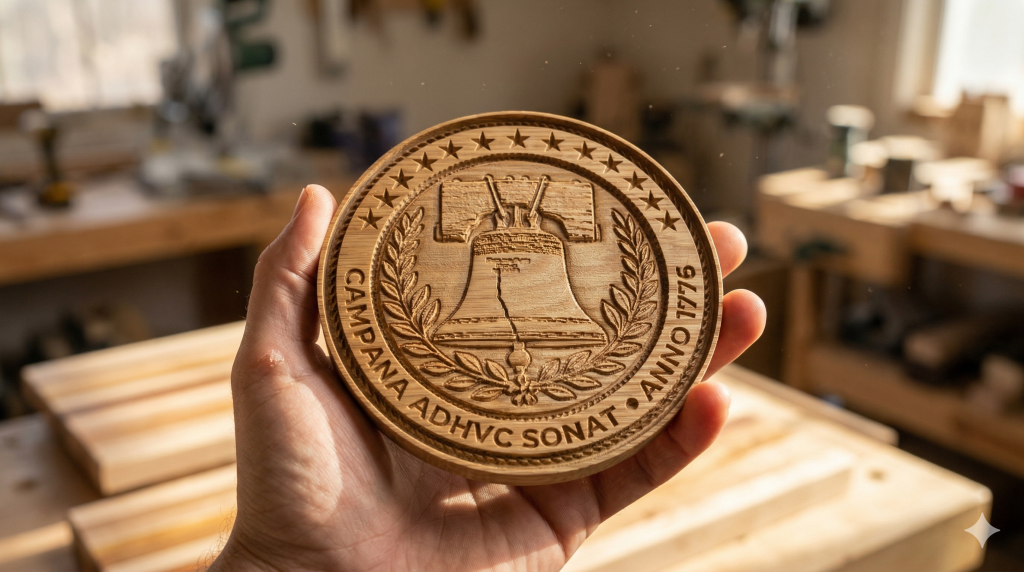
What 250 Years Actually Means
In the next 100 days, Americans will see a mountain's worth of branding.
Logos.
Slogans.
Campaigns designed to mark 250 years since 1776.
That’s expected.
It’s how modern culture handles big moments—by turning them into something that can be packaged, shared, and consumed quickly.
But a country isn’t a campaign.
And 250 years isn’t a moment.
There’s a difference between what you recognize and what you remember.
Recognition is instant.
Memory is earned.
Recognition is designed to catch your eye.
Memory is built through effort, responsibility, and time.
Recognition fades the moment the next thing arrives.
Memory stays—because it’s tied to something real.
A nation that reaches 250 years doesn’t get there through recognition alone.
It gets there through memory.
The American story is not light.
It was not designed to be easy to explain or easy to carry. It has always required people willing to take on weight—responsibility for families, for communities, for work that had to be done whether anyone noticed or not.
That is what holds a country together over time.
Not attention.
Responsibility.
It’s tempting, especially now, to reduce everything to symbols.
A symbol is efficient. It travels quickly. It can be printed, scaled, distributed. It gives the impression that something has been captured, defined, and understood.
But most symbols don’t carry weight.
They carry recognition.
And recognition is not enough for something that has taken 250 years to build.
If this anniversary becomes nothing more than a collection of images and slogans, it will pass like any other campaign—noticed briefly, then replaced.
But if it becomes a moment where people reconnect with what was actually built, and what it took to build it, then it does something different.
It carries forward.
The question isn’t how we celebrate 250 years.
The question is whether what we create now will still matter in 2076.
That’s a higher standard.
It requires building things that don’t depend on the moment to survive.
It requires choosing depth over reach.
Weight over convenience.
Meaning over visibility.
Because the truth is simple:
You can manufacture attention.
You cannot manufacture meaning.
Meaning comes from what endures.
A tool that gets used for decades.
A craft that gets passed from one generation to the next.
A set of ideas that don’t collapse when they’re tested.
These are not abstract concepts. They are the quiet, durable structures that make a country more than a place on a map.
They are also the hardest things to build.
There is nothing wrong with celebration.
There is nothing wrong with wanting to mark a milestone in a way that is visible, accessible, and shared.
But if visibility becomes the goal, instead of the outcome, something important is lost.
A nation does not become stronger because it is seen.
It becomes stronger because it is understood—and because enough people choose to carry that understanding forward.
That kind of understanding cannot be handed off through something designed to be consumed and forgotten.
It has to be built into experiences.
Into work.
Into stories that reflect not just what is easy to admire, but what is difficult to sustain.
This is where the real opportunity sits.
Not in creating something that captures attention for a season—but in creating something that people choose to keep.
Something they hold onto.
Something they pass down.
Something that reminds them that what they have is not automatic, and not permanent.
Because 250 years is not just a marker of time.
It is evidence of continuity.
Of people who chose, again and again, to build instead of abandon, to maintain instead of neglect, to take responsibility instead of passing it off.
That is the story.
Not a simplified version of it.
Not a softened version of it.
The real one.
The next chapter of this country will not be shaped by what gets the most attention this year.
It will be shaped by what people decide is worth keeping when the noise fades.
What they invest in.
What they protect.
What they choose to pass forward.
That’s the standard a 250th anniversary should meet.
Not just something to notice.
Something to carry.
Because in the end, this isn’t about how a country looks in a given moment.
It’s about whether what it stands for can still be recognized—clearly, honestly, and without simplification—by the people who inherit it next.
250 years is not a celebration.
It’s a responsibility.
Freedom Still Rings.